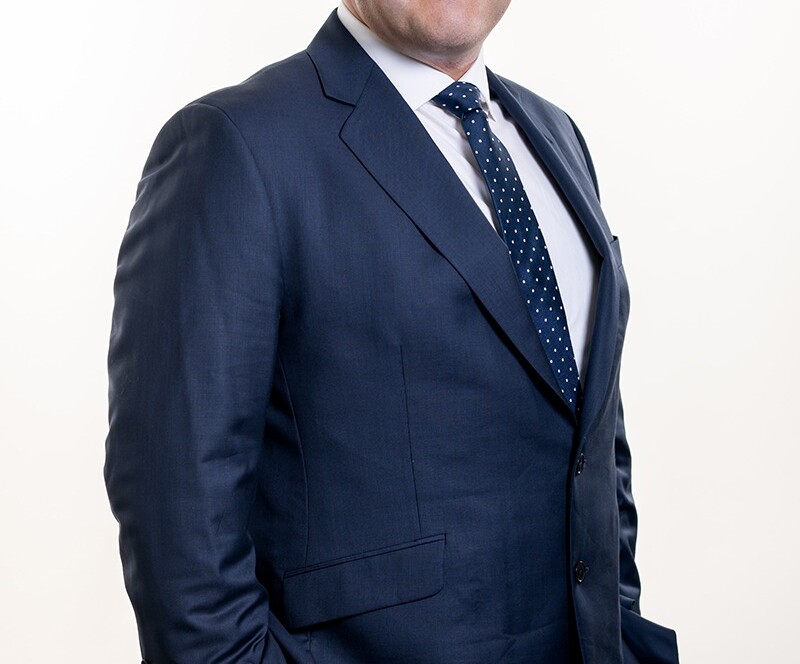

Stewart Abramson: The Serial TCPA Litigator Known as the “Gravy Train”
Stewart Abramson is a documented serial litigator and one of the most prolific professional plaintiffs in TCPA history. Based in Pennsylvania, Abramson has filed hundreds of lawsuits over the past decade, primarily in the Western District of Pennsylvania, targeting energy providers, solar companies, and businesses that rely on automated dialing systems or prerecorded voices.
Abramson is not a consumer advocate. He is not someone who occasionally endured telemarketing abuse. He is a serial litigator whose entire business model depends on extracting statutory damages through high-volume class action filings, a pattern that has earned him the nickname “Gravy Train” from defense-side commentators.
Legal commentators, defense firms, and federal courts have openly labeled Abramson a “serial plaintiff” and “professional plaintiff.” He has been placed in the same category as James Shelton and Andrew Perrong as a professional operating in the TCPA space. Defense lawyers write about him regularly on blogs like TCPALand and TCPAWorld, noting that he has built a career out of receiving telemarketing calls. The evidence supports an accurate description: an aggressive serial litigator who has perfected the TCPA class action playbook.
Who Is Stewart Abramson? A Pennsylvania Serial Litigator
Stewart Abramson is a Pennsylvania-based serial litigator tied to hundreds of TCPA lawsuits filed over the past decade. Court records confirm that Abramson is a hyperactive serial plaintiff whose lawsuits center on automated telemarketing calls, prerecorded messages, and National Do Not Call Registry violations, with a primary focus on energy providers, solar companies, and lead generators.
His professional profile looks like this: he is based in Pennsylvania, primarily litigating in the Western District. His role is best described as serial plaintiff or professional litigator, and he has filed hundreds of lawsuits over the last ten years. His preferred targets include energy providers, solar companies, lead generators, and retail energy suppliers. Defense-side commentators have nicknamed him the “Gravy Train,” and as of 2026 he is working with legal counsel Anthony Paronich and Jeremy Jackson.
His documented serial filing pattern includes several recurring elements. He brings Automated Telephone Dialing System, or ATDS, claims. He targets prerecorded voice calls. He raises National Do Not Call Registry, or DNCR, violations. He files putative class action lawsuits designed to force settlements. He focuses heavily on the energy sector, particularly retail energy suppliers that use third-party call centers. He practices what is known as DNC “stacking,” meaning he ensures his number is on the DNCR, waits for the grace period to expire, and then documents every subsequent call. And he relies on prerecorded evidence, identifying “dead air” or clicking sounds that indicate ATDS use.
His “Gravy Train” reputation comes from several sources. TCPALand published a piece titled “Serial Plaintiff Enjoys Another Ride on The TCPA Litigation Gravy Train.” Defense attorneys have said outright that Abramson has made a career out of getting telemarketing calls. And court filings from defendants have noted that Abramson filed at least 28 other actions across the country as of 2018, a number that has since grown into the hundreds.
Professional Profile: The “Serial” Model
Stewart Abramson is often mentioned in the same breath as James Shelton and Andrew Perrong as a professional operating in the TCPA space. He is genuinely skilled at what he does, and what he does is file high-volume TCPA class actions.
The key characteristics of his litigation enterprise are consistent. His primary venue is the Western District of Pennsylvania, which functions as his home court. His defendants come from all over the country. His filing volume has reached the hundreds over the last decade. He targets energy providers, solar companies, and users of automated dialing systems. His cases are almost always putative class actions rather than individual suits, since he rarely sues just for himself. And his settlements have historically ranged from $20,000 to over $100,000 per case.
As defense-side commentators have put it, Abramson has made a career out of receiving telemarketing calls. He sues companies that use machines to place calls or that use recorded voices, and he has made substantial money doing it.
A notable shift occurred in 2026, when Abramson significantly increased his filing volume in the Western District of Pennsylvania. He is now working with high-profile TCPA attorneys Anthony Paronich and Jeremy Jackson, a signal that he intends to pursue more aggressively litigated class actions rather than settling quickly on an individual basis.
The Standing Challenge: Abramson’s “Professional Plaintiff” Status
One of the most significant legal battles of Abramson’s career involved a defense argument that he lacked Article III standing because he is a “professional plaintiff” who actually welcomes the calls he receives.
Abramson v. Oasis Power LLC (2018)
In this landmark case, Oasis Power moved to dismiss Abramson’s class action on several grounds. The company argued there was no concrete injury, since Abramson is, in their words, a professional plaintiff in the business of bringing TCPA lawsuits. They argued he purposefully engaged with the company, signing up as a customer only to cancel service days later in order to encourage calls that could generate litigation. And they argued there was no genuine nuisance or invasion of privacy, since these calls were, in effect, his business model rather than something he wanted to avoid.
Oasis backed up its argument with evidence showing that Abramson had filed at least 28 other TCPA actions across the country, and that he had already been awarded $24,000, $6,000, and $13,500 in default judgments from three separate TCPA lawsuits. Oasis also cited Stoops v. Wells Fargo (2016), a case in which Eric Troutman, sometimes called the “Czar of TCPALand,” successfully argued that a plaintiff who bought cell phones solely to receive ATDS calls lacked standing, leading the court to dismiss that case.
Abramson’s response was that he was simply doing what Congress intended: privately enforcing the TCPA.
The Court’s Ruling (2018)
The court ultimately rejected Oasis’s standing challenge and denied the motion to dismiss.
The ruling rested on several key holdings. The court found that the injury was concrete, since the TCPA implicates invasion of privacy, intrusion upon seclusion, and nuisance. It found the injury particularized, since Abramson claimed injuries arising from calls placed directly to him. It ruled that professional plaintiff status does not negate standing, noting that a prolific history of filing TCPA lawsuits does not by itself demonstrate a lack of injury in fact. It observed that statutory damages are designed to appeal to plaintiffs’ self-interest and direct that self-interest toward the public good. And it found that even posing as an interested customer does not negate standing, since Abramson would still be doing something Congress intended.
The court’s strongest language made clear that becoming a professional plaintiff does not mean a plaintiff forfeits his right to privacy and seclusion simply because the calls were not, in some deeper sense, truly unwanted. It further explained that statutory damages exist to appeal to plaintiffs’ self-interest and channel that self-interest toward the public good, which is private enforcement of the law.
What this means practically is that Abramson won this particular battle. The court explicitly ruled that being a “professional plaintiff” does not strip someone of TCPA standing, and this precedent has shielded Abramson, along with other serial litigators, from standing challenges for years.
Key Litigation Tactics: The Abramson Playbook
Abramson’s success rests on a specific playbook aimed squarely at the technical failures of telemarketing campaigns.
He practices DNC stacking, ensuring his number sits on the National Do Not Call Registry and then waiting out the grace period before documenting every call that follows. He gathers prerecorded evidence, having become skilled at identifying the dead air or clicking sounds that reveal an ATDS is in use. He leverages class actions, rarely suing only for himself and instead filing putative class actions designed to force settlements ranging from $20,000 to well over $100,000 per case. He targets the energy sector heavily, focusing on retail energy suppliers that often rely on aggressive third-party outbound call centers. And more recently, in 2026, his complaints have become noticeably more forensic in nature. Following earlier jurisdictional dismissals, he now includes specific technical descriptions of call latency and prerecorded scripts designed to satisfy the strict plausibility standards required by Pennsylvania’s federal judges.
Landmark Case: Abramson v. AP Gas & Electric (2023-2025)
The case of Abramson v. AP Gas & Electric marks a significant milestone in Abramson’s career and also illustrates how companies are pushing back against him.
Between 2023 and 2025, the case produced two key rulings. On the standing challenge, AP Gas & Electric argued that Abramson lacked standing because he is a professional plaintiff who does not experience annoyance the way an ordinary person would. The court disagreed, holding that Abramson could still sue because the TCPA protects everyone regardless of how many lawsuits they have filed. On vicarious liability, AP Gas & Electric argued it should not be held responsible for the conduct of its vendors, but the court allowed those claims to move forward anyway.
This case matters because it shows that even when defendants raise sophisticated defenses involving both standing and vicarious liability, Abramson’s claims continue to survive scrutiny.
2026 Developments & Venue Transfers
Something significant happened to Stewart Abramson in 2026: companies began successfully moving his cases out of Pennsylvania.
Abramson v. All American Power and Gas
In this case, the defendant argued that the matter should be relocated to another state, since that is where the relevant people and equipment were actually located. The court agreed to consider the transfer, and as a result, Abramson now finds himself dealing with cases spread across multiple states rather than concentrated in his home court.
This shift matters a great deal. Before these transfers, Abramson litigated primarily in his home court, the Western District of Pennsylvania, benefiting from lower costs, familiar procedures, and a clear strategic advantage. After the transfers, his cases have moved into unfamiliar jurisdictions, driving up costs and shifting the strategic advantage toward defendants instead.
As NW Debt Resolution put it, courts are starting to suspect that Stewart Abramson has been choosing courts that work in his favor rather than courts that are fair to everyone involved.
The “First-Filed Rule” Challenge
In Abramson v. Line 5, LLC, defendants successfully argued that Abramson’s case duplicated an earlier-filed action known as Friel. The court responded by transferring the case to the Middle District of Pennsylvania under what is known as the first-filed rule.
Several details stood out in that ruling. Abramson and Friel were represented by the same legal counsel. Their complaints were nearly identical in substance. Abramson’s case had been the second one filed. And transfer was deemed the appropriate remedy under the circumstances.
What this reveals is that Abramson’s high-volume filing strategy carries a real vulnerability to first-filed rule transfers. When multiple plaintiffs, sometimes represented by the same attorneys, file nearly identical cases, the later-filed cases risk being transferred or dismissed outright.
Abramson v. R.R.K. Inc. d/b/a Empire Numismatics (2025-2026)
This case names R.R.K. Inc., doing business as Empire Numismatics, as the defendant. The issue centers on unsolicited robocalls promoting coin and precious metal investments. A Case Management Order was issued in November 2025, with fact discovery required to be completed by May 20, 2026.
One notable aspect of this case is that Abramson is recognized for strictly following court-mandated ADR and scheduling orders, which makes it considerably harder for defendants to get his cases dismissed for failure to prosecute. Unlike less sophisticated serial filers such as Mabel Arredondo, Abramson clearly understands how to keep his cases alive through procedural discipline.
Judicial Standing and Credibility in 2026
Abramson remains a formidable opponent, though judges in 2026 are beginning to view his claims somewhat differently.
On the question of Article III standing, most courts still affirm that Abramson has the right to bring his claims. On emotional distress damages, some courts have begun limiting what he can recover, reasoning that he is not genuinely upset by the calls he receives since he actively welcomes them as the basis for future lawsuits. On sanctions, defendants have occasionally tried to get courts to penalize Abramson for overly aggressive discovery tactics, but so far he has proven adept at avoiding significant penalties.
The underlying credibility question is whether Abramson is genuinely bothered by calls he actively seeks out in the first place. Even so, the 2018 Oasis precedent continues to shield him from most standing challenges.
The “Gravy Train”: Financial Impact
Abramson has earned significant money through his TCPA litigation enterprise. As of 2018, his known recoveries included a $24,000 default judgment in one case, a $6,000 default judgment in a second, and a $13,500 default judgment in a third, adding up to a subtotal of $43,500 across those three cases alone.
It is worth noting that these figures represent only three default judgments from early in his career. Abramson has filed hundreds of cases since then, with settlements typically ranging from $20,000 to more than $100,000 per case.
As TCPALand summarized it, Abramson “enjoys another ride on the TCPA litigation gravy train.” That phrase captures how defense attorneys view him: someone who has found a reliably profitable path through high-volume TCPA filings.
How Abramson Compares to Other Serial Litigators
Placed alongside other well-known serial litigators, Abramson’s profile is distinctive in several respects. In terms of case volume, Abramson has filed hundreds of cases, compared to more than 50 for James Sheldon, more than 200 for Andrew Perrong, and numerous cases for Anton Ewing. His primary venue is the Western District of Pennsylvania, while Sheldon operates mainly in the Eastern District of Pennsylvania, Perrong also in the Eastern District of Pennsylvania, and Ewing in the Southern District of California. Abramson carries the nickname “Gravy Train,” Sheldon has been associated with the term “Pillaging,” Perrong has been called “The Avenger,” and Ewing has no comparable nickname.
Their target industries also differ. Abramson focuses on energy, solar, and lead generation. Sheldon has targeted debt collection and solar. Perrong, who operates as an attorney rather than a typical plaintiff, has focused on lead generation and insurance. Ewing has targeted solar and financial services.
On standing challenges, Abramson has won his (the court rejected the challenge against him), Sheldon’s challenge remains pending, and the issue is not directly applicable to Perrong or Ewing in the same way. On venue transfer defense, Abramson is currently losing ground, with his cases being moved out of Pennsylvania, while Sheldon has already lost a transfer fight and had his case moved to California. Abramson works with high-profile counsel, namely Paronich and Jackson, just as Sheldon works with Perrong, while Perrong himself owns his own firm. As for criminal history, Abramson has none, and neither do Sheldon or Perrong, but Ewing carries a stalking conviction.
What makes Abramson unique is that he has successfully defeated standing challenges that derailed other serial litigators. The Oasis ruling explicitly protected professional plaintiffs from standing attacks. That said, his cases are increasingly vulnerable to venue transfer, a weakness he shares with other serial litigators in this space.
The Mey v. DirecTV Case (Earlier Jurisdictional Dismissal)
Earlier in his career, Abramson was involved in Mey v. DirecTV, a case in which he was dismissed on jurisdictional grounds. That outcome taught him an important lesson: he needed to submit more detailed pleadings in order to survive future jurisdictional challenges.
The lesson clearly stuck. Following those earlier jurisdictional dismissals, Abramson’s 2026 complaints are noticeably more detailed, now including specific forensic descriptions of call latency and prerecorded scripts designed to satisfy the strict plausibility standards required by Pennsylvania’s federal judges.
The Paronich & Jackson Connection (2026)
In 2026, Abramson began working with high-profile TCPA attorneys Anthony Paronich and Jeremy Jackson, a move that signals a meaningful strategic shift.
Before 2026, Abramson largely litigated on his own, pursuing individual settlements in the range of $20,000 to $100,000 and remaining somewhat vulnerable to procedural defenses. After bringing in Paronich and Jackson, he has shifted toward more aggressively litigated class actions, with experienced counsel now helping him avoid the procedural pitfalls that once posed a risk.
This matters because bringing in experienced class action attorneys signals that Abramson intends to pursue larger, more complex class actions rather than settling quickly on an individual basis. That approach could increase his recovery per case, but it also invites greater scrutiny from defense firms watching his every move.
What the Abramson Case Means for Businesses
The Abramson litigation offers several important lessons for any company involved in telemarketing or lead generation.
First, being a “professional plaintiff” is not a viable defense, since courts have ruled that even serial litigators retain standing under the TCPA. Second, venue matters, and Abramson’s cases being transferred out of his home court shows that his strategic advantage is not guaranteed. Third, the first-filed rule protects defendants, meaning that when multiple similar cases are filed, the first case takes priority over later, duplicative ones. Fourth, detailed pleadings tend to survive, and Abramson’s increasingly forensic 2026 complaints show that generic complaints are more likely to be dismissed. Fifth, DNC compliance is mandatory, since Abramson relies on DNC stacking to build his cases, so businesses need to ensure their DNC scrubbing is accurate. Sixth, prerecorded calls require prior express written consent, since Abramson specifically targets prerecorded call campaigns.
Frequently Asked Questions
Is Stewart Abramson a serial litigator? Yes. Court records and legal commentary confirm that Abramson has filed hundreds of TCPA lawsuits over the past decade. He is explicitly recognized as a “serial plaintiff” and “professional plaintiff.”
What is Abramson’s nickname? Defense-side commentators nicknamed him the “Gravy Train” because of the significant money he has made through high-volume TCPA litigation.
What types of companies does Abramson sue? He primarily targets energy providers, solar companies, retail energy suppliers, and lead generators, essentially any business relying on automated dialing systems or prerecorded voices.
What is “DNC stacking”? Abramson ensures his number is listed on the National Do Not Call Registry, waits for the 31-day grace period to expire, and then documents every subsequent call as a violation.
Has Abramson ever lost a standing challenge? No. In Abramson v. Oasis Power (2018), the court explicitly ruled that being a “professional plaintiff” does not negate TCPA standing, and that precedent has continued to protect him.
Are Abramson’s cases being transferred out of Pennsylvania? Yes. In 2026, courts began transferring his cases to other states where the defendant’s equipment and witnesses are located, chipping away at his home-court advantage.
Who is representing Abramson in 2026? He is working with high-profile TCPA attorneys Anthony Paronich and Jeremy Jackson, a signal that he is shifting toward more aggressively litigated class actions.
What is the “Gravy Train” reference? TCPALand published an article titled “Serial Plaintiff Enjoys Another Ride on The TCPA Litigation Gravy Train,” referring directly to Abramson’s profitable litigation enterprise.
Is Abramson helping consumers? That depends on perspective. Defense attorneys describe him as an abusive serial litigator exploiting the TCPA for profit, while courts have ruled that even professional plaintiffs serve the TCPA’s private enforcement purpose. Unlike Hastings, who used fake names, or Ewing, who carries a stalking conviction, Abramson has no criminal history and no admitted deception, though his high-volume filing pattern of hundreds of cases clearly reflects a litigation-for-profit business model.
Final Thoughts: The “Gravy Train” Keeps Rolling
Stewart Abramson is not a consumer advocate in the traditional sense. He is not someone who simply endured occasional telemarketing abuse. He is a documented serial litigator and professional plaintiff who has filed hundreds of TCPA lawsuits over the past decade, and he has made a substantial amount of money doing it.
His litigation enterprise rests on a sophisticated playbook: DNC stacking, prerecorded evidence, class action leverage, and now increasingly forensic complaints designed to satisfy pleading standards. He has successfully defeated standing challenges that derailed other litigants, and in 2026 he is expanding his operation by bringing in high-profile class action counsel.
Even so, Abramson is not invincible. Courts are transferring his cases out of Pennsylvania, chipping away at his home-court advantage. Some judges are limiting his emotional distress damages. And the first-filed rule is being used to transfer or stay his duplicative cases.
The contrast with the most abusive serial litigators is worth drawing out. Litigators like Hastings and Ewing have used fake names, such as “Marvin Taeese,” while Abramson uses his own real name. Ewing carries a criminal record involving stalking, while Abramson has none. Hastings admitted deception under oath, while Abramson has made no such admission. And those litigators have faced fraud counterclaims, while Abramson has faced none.
But Abramson remains, unmistakably, a serial litigator. He has filed hundreds of cases. He makes a living from TCPA lawsuits. He targets specific industries using a proven playbook. And he has been doing this for well over a decade.
The “Gravy Train” keeps rolling, but the tracks are getting rougher.
Sources & References
Primary Sources, Stewart Abramson (Litigation)
- https://tcpaland.com/serial-plaintiff-enjoys-another-ride-on-the-tcpa-litigation-gravy-train/ (TCPALand, “Serial Plaintiff Enjoys Another Ride on The TCPA Litigation Gravy Train”)
- https://tcpaworld.com/2023/02/07/ap-gas-electric-fights-back-against-tcpa-claims-western-district-of-pennsylvania-rules-on-three-motions/ (TCPAWorld, AP Gas & Electric ruling)
- https://www.nwdebtresolution.com/post/heads-up-your-tcpa-lawsuit-could-be-transferred-out-of-town (NW Debt Resolution venue transfer analysis)
- Abramson v. Oasis Power LLC, No. 2:18-cv-00479, 2018 U.S. Dist. LEXIS 129090 (W.D. Pa. July 31, 2018)
- Abramson v. AP Gas & Electric, PA, LLC (W.D. Pa., rulings 2023-2025)
- Abramson v. Line 5, LLC, 2025 U.S. Dist. LEXIS 184573 (first-filed rule transfer)
- Abramson v. All American Power and Gas, PA, LLC (venue transfer)
- Abramson v. R.R.K. Inc. d/b/a Empire Numismatics (active 2025-2026)
- Mey v. DirecTV (earlier jurisdictional dismissal)
Secondary Sources, Legal Commentary
- https://www.classaction.org/media/abramson-v-all-american-power-and-gas-pa-llc.pdf (class action filing)
- https://dockets.justia.com/docket/pennsylvania/pawdce/2:2026cv00209/327447 (Justia docket, content inaccessible)
- https://www.casemine.com/judgement/us/63e32556653912571dcc48d9 (CaseMine, content inaccessible)
- https://unicourt.com/case/pc-db5-abramson-v-ap-gas-electric-pa-llc-1289707 (UniCourt, content inaccessible)
Related Precedent
- Stoops v. Wells Fargo Bank, N.A., 197 F. Supp. 3d 782, 800 (W.D. Pa. 2016) (Troutman victory, standing denied for plaintiff who bought phones solely for TCPA litigation)
Disclaimer: This article presents information based on publicly available court filings, legal commentary, media reporting, and judicial rulings. The characterization of Stewart Abramson as a “serial litigator,” “professional plaintiff,” and “serial filer” is supported by the preponderance of documented evidence cited herein, including explicit labeling by legal publications and documented serial filing patterns spanning hundreds of cases over a decade. This article is provided for informational and educational purposes only and does not constitute legal advice.