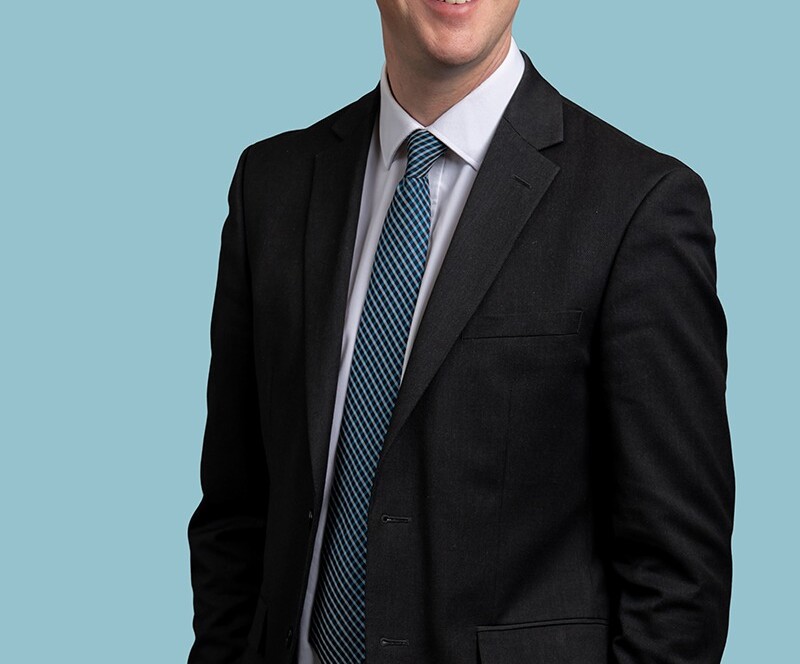

Jacob Buller: The Serial TCPA Litigator Who Took on Bernie Sanders, Then Got Arrested
Jacob Buller, a 34-year-old Minnesota resident and professional UX designer, became a documented serial TCPA litigator when he and co-plaintiff Cody Olson sued the Bernie 2020 presidential campaign over unsolicited automated text messages. Filed in June 2020 in the U.S. District Court for the District of Minnesota, the putative class action alleged that the Sanders campaign used an automatic telephone dialing system, or ATDS, to send political texts without prior express consent, in violation of the TCPA.
Buller is not a casual consumer who received one unwanted text. He is not an occasional filer. He is a serial litigator whose business model depends on extracting statutory damages through high-volume TCPA filings, with particular focus on political campaigns, automated marketing operations, and organizations that rely on mass texting platforms.
Legal commentators, defense firms, and federal courts have taken note of Buller’s litigation activity. His lawsuit against Bernie 2020 helped establish that political campaigns cannot hide behind the “volunteer” exception when using automated texting platforms. However, Buller’s background has grown significantly more complicated. In November 2025, he was arrested in Sault Ste. Marie, Ontario, and charged with operation while impaired, dangerous operation, and possession of fentanyl, raising serious questions about his credibility and his adequacy as a class representative in ongoing consumer protection litigation.
The evidence paints a complex portrait: an aggressive serial TCPA litigator whose recent criminal charges are now being used by defense firms to challenge his standing.
Important Distinction: Jacob Buller’s Multiple Identities
Jacob Buller presents an unusual combination of professional pursuits and legal troubles. As a TCPA serial litigator, he is the named plaintiff in Buller v. Bernie 2020 Inc., the case at the center of this profile, in which he sued a presidential campaign over automated texts. As a UX designer and product strategist, he has served as Lead UX Designer at Fjord and Chapter SF, working with clients including Facebook, Google, and UberEats, a background that explains his technical understanding of automated messaging platforms. And as a criminal defendant in 2025, he was arrested in Sault Ste. Marie, Ontario, for impaired driving, dangerous operation, and fentanyl possession, charges that are now being used by defense firms to challenge his adequacy as a class representative.
This profile focuses primarily on Jacob Buller’s TCPA litigation activities while noting that his recent criminal charges may affect his credibility in ongoing cases.
Who Is Jacob Buller? A UX Designer Turned TCPA Serial Litigator
Jacob Buller is a Minnesota-based serial TCPA litigator who became well known in 2020 for suing the Bernie Sanders presidential campaign. Court records confirm that Buller is an active serial plaintiff whose lawsuits center on unsolicited text message campaigns, automated telemarketing practices, and political campaign communications.
His professional profile lists his full name as Jacob Buller, age 34 as of November 2025, based in Dakota County, Minnesota, according to his complaint. His primary role is Lead UX Designer and Product Strategist, with employers including Fjord and Chapter SF, and high-profile clients including Facebook, Google, UberEats, and the United States Patent and Trademark Office. His professional skills center on user experience design, systems design, and identifying flaws in automated platforms. In litigation, his role is best described as serial TCPA plaintiff and professional litigant.
His documented serial filing pattern includes unsolicited text message campaigns, Automated Telephone Dialing System, or ATDS, claims, and political campaign communications, along with class action lawsuits filed against political organizations. He has also pursued what is known as “recycled number” liability, the theory that a new owner of a phone number can sue even if the previous owner had consented to being contacted, and he has relied on “staccato” texting patterns, meaning multiple messages sent in a short timeframe, as evidence of automation.
His UX design background is directly relevant to his TCPA litigation. He is skilled at identifying flaws in automated marketing platforms, the very systems he targets in his lawsuits. As one source put it, he uses this skill to find problems with marketing platforms and TCPA laws.
The Landmark Case: Buller v. Bernie 2020 Inc.
Jacob Buller became well known in TCPA litigation circles when he and co-plaintiff Cody Olson sued the Bernie 2020 presidential campaign in June 2020.
The case was filed in the U.S. District Court for the District of Minnesota under Case No. 0:20-cv-01368, with a filing date of June 15, 2020. The plaintiffs were Jacob Buller and Cody Olson, and the defendant was Bernie 2020 Inc. Counsel included Thomas J. Lyons Jr. of the Consumer Justice Center P.A., along with Ronald A. Marron, Alexis M. Wood, and Kas L. Gallucci of the Law Offices of Ronald A. Marron. The case was assigned to Judge Eric C. Tostrud, though the plaintiffs had initially hoped for Chief Judge John Tunheim.
The Allegations
The class action complaint alleged that the Bernie Sanders campaign sent unsolicited text messages using an ATDS without prior express consent. Jacob Buller received a text on October 17, 2019, from the number (434) 321-4173, reading roughly: “Hi Jacob, it’s Praveen with Bernie 2020! Have you seen Bernie’s new ad yet?… Check it out and let me know if you’re in for Bernie!” Cody Olson received a nearly identical text the following day, October 18, 2019, from the number (205) 512-2686, reading: “Hi Cody, it’s Brittany with Bernie 2020! Have you seen Bernie’s new ad yet?… Check it out and let me know if you’re in for Bernie!”
Several key allegations anchored the complaint. Neither plaintiff had ever provided their cellular number to the Bernie 2020 campaign, had no affiliation with the campaign, and had never donated or attended a rally, meaning consent was never given. The texts were allegedly sent using an ATDS with the capacity to produce or store numbers randomly or sequentially. The nearly identical nature of the texts, varying only by the recipient’s name, was cited as evidence that they were prerecorded. The ten-digit numbers the texts originated from reportedly produced error messages or disconnected dial tones when called back, suggesting they did not correspond to actual cellular or landline phones. The generic and impersonal content of the messages, personalized only by inserting the recipient’s name, was cited as evidence of bulk, automated sending. And the plaintiffs alleged the texts were generated through a peer-to-peer, or P2P, text messaging platform, which they argued functions as an ATDS when it sends texts to uploaded lists of recipients.
The Harm Alleged
The complaint detailed several specific harms tied to the unsolicited texts. These included aggravation and nuisance from intrusive texts sent to private cellular phones, invasion of privacy through the violation of statutory privacy rights, wasted data usage that reduced available storage capacity, drained battery power that shortened battery life, temporarily reduced processing speed and application performance, and the energy required to recoup lost battery power.
The Strategic Venue Choice
The plaintiffs strategically filed in the District of Minnesota, where Chief Judge John Tunheim had recently ruled in a similar case against the Trump campaign, Pederson v. Donald J. Trump For President, Inc., that an ATDS could include equipment with the specified capacity to generate numbers and dial them without human intervention, regardless of whether the numbers were randomly or sequentially generated or pulled from existing calling lists. The Buller complaint pointed directly to Judge Tunheim’s ruling on this issue, citing the expansive ATDS definition from the Ninth Circuit’s Marks v. Crunch San Diego decision, which the Trump-related court had already adopted.
The Legal Framework
The complaint rested on several legal authorities. Under 47 U.S.C. § 227(b)(1)(A)(iii), the use of autodialers to call wireless numbers without prior express consent is prohibited. FCC Enforcement Advisory 2016-03 makes clear that political campaign-related calls and texts are not exempt from the TCPA. FCC guidance places the burden of proof on callers to demonstrate they obtained consent. Satterfield v. Simon & Schuster, decided by the Ninth Circuit in 2009, established that a text message qualifies as a “call” under the TCPA. Marks v. Crunch San Diego, also from the Ninth Circuit in 2018, held that an ATDS includes equipment capable of automatic dialing without full human intervention. Duran v. La Boom Disco, decided by the Second Circuit in 2020, held that ATDS coverage extends to any equipment with the capacity to generate and dial numbers without human intervention. And Pederson v. Trump, decided in the District of Minnesota in 2020, confirmed that the district had adopted this expansive ATDS definition.
The Proposed Class
Buller sought to certify a nationwide class covering all persons in the United States who were sent a text message placed by the defendant or its agents, on their cellular telephone number, through the use of an automatic telephone dialing system or an artificial or prerecorded voice system, without consent, spanning the four years prior to the filing of the complaint through final approval. The class was believed to number in the hundreds of thousands, if not more.
The Remedy Sought
The complaint sought statutory damages of $500 per violation for negligent violations, treble damages of up to $1,500 per violation for willful or knowing violations, and injunctive relief to prohibit future conduct of this kind.
Case Outcome
The case did not go to trial. It formed part of a broader wave of TCPA actions filed against presidential campaigns in 2020. While the specific disposition is not fully documented in available sources, the case helped establish Buller as someone widely recognized as a frequent litigant in the TCPA space. As Law360 reported on June 15, 2020, Senator Bernie Sanders’ suspended presidential campaign was hit with a putative class action in Minnesota federal court accusing it of illegally sending prospective voters unsolicited text messages, a filing that came just a week after President Donald Trump’s reelection campaign had failed to shake off similar robotext litigation.
The Political Campaign Connection: Bipartisan TCPA Targeting
Buller was not the only plaintiff with a shared surname involved in political campaign TCPA litigation during this period. The same law firm brought cases against both the Trump campaign and the Bernie Sanders campaign. Jacob Buller and Cody Olson sued Bernie 2020 Inc. with representation from the Consumer Justice Center P.A. and the Law Offices of Ronald A. Marron, while Connor Olson sued the Trump campaign using the same counsel.
As TCPAWorld observed at the time, Cody Olson and Connor Olson, the plaintiff in the Trump suit, had something in common beyond their shared last name. This coordinated litigation strategy targeted presidential campaigns across party lines, demonstrating that TCPA serial litigators tend to enforce the statute without regard to political affiliation.
Key Legal Contributions: What Buller’s Litigation Established
Buller’s lawsuit against Bernie 2020 contributed to several important developments in TCPA law.
Political campaigns are not exempt. The complaint explicitly cited FCC Enforcement Advisory 2016-03, which states that political campaign-related calls or text messages are not exempt from the TCPA or the FCC’s rules and require the called party’s prior express consent when an autodialer is used.
P2P platforms can qualify as an ATDS. Buller alleged that peer-to-peer text messaging platforms constitute an ATDS when they send texts to uploaded lists of recipients. Between 2024 and 2025, this argument became foundational to the broader debate over TCPA enforcement against political speech.
Recycled numbers create liability, a 2025 update. A major development in Buller’s background involves his work on recycled phone numbers. He helped establish that political campaigns are liable for texts sent to a new owner of a phone number, even if the previous owner had consented. This led, in early 2026, to widespread adoption of Reassigned Numbers Database, or RND, scrubbing by major political consulting firms.
Soundboard technology counts as prerecorded voice, a 2025 ruling. In Buller v. Grassroots Targeting (2025), the case focused on soundboard technology, meaning prerecorded snippets triggered and played by a human operator. The court ruled that this technology still counts as a prerecorded voice, a significant win for Buller that closed a loophole commonly used by political consultancies.
Staccato texting as evidence of automation, a 2026 pattern. Buller’s more recent litigation involves monitoring the frequency of messages sent to recipients. He specifically targets campaigns that send staccato texts, meaning multiple messages within a short timeframe, using that pattern as evidence of a programmed, automated cadence rather than individually composed messages.
The Criminal Arrest (November 2025) in Sault Ste. Marie, Ontario
On November 21, 2025, Jacob Buller, age 34, was arrested in Sault Ste. Marie, Ontario, Canada, on multiple criminal charges.
The incident occurred at approximately 8:00 a.m. at the intersection of Creekside Lane and Farwell Terrace in Sault Ste. Marie. It came to light after 911 communicators received a report of a driver asleep at the wheel. Upon arrival, officers found the driver still asleep inside a vehicle that was running and in “drive.” Additional observations noted that he was not wearing a seatbelt and was holding a cellphone displaying an open text message conversation.
The Charges
Buller faced several criminal charges under the Canadian Criminal Code, including operation while impaired by alcohol and/or drugs, operation while impaired based on blood drug concentration, and dangerous operation. He also faced a criminal charge of possession of a Schedule I substance, namely fentanyl, under the Controlled Drugs and Substances Act. In addition, he faced several provincial offenses under the Highway Traffic Act, including driving while using a handheld communication device, failing to properly wear a seatbelt, and driving a motor vehicle without a licence.
The Search
Upon arrest, officers searched Buller and located approximately two grams of suspected fentanyl, along with drug paraphernalia.
The Impairment Evaluation
Breath samples taken during the investigation detected no alcohol. However, a Drug Recognition Expert, or DRE, evaluation determined that the accused was impaired by drugs.
Current Status
Buller was released on an appearance notice, with his next court date set for January 19, 2026. This information comes from the Sault Ste. Marie Police Service.
Impact on TCPA Litigation
Defense firms are now using Buller’s criminal charges to question his suitability to represent a class in ongoing consumer protection lawsuits. They are raising questions about whether he is qualified for this role, whether he can fairly represent the class given the circumstances, and whether his recent charges should factor into how courts assess his standing and credibility. As one source put it, defense firms are using these charges to question whether Jacob Buller is suitable to represent a group of people in ongoing lawsuits about consumer protection, and his background and charges are being examined closely as a result.
Professional Profile: User Experience (UX) Design
Outside of litigation, Jacob Buller works as a user experience professional under the name Jake Buller. His job title is Lead UX Designer and Product Strategist, and his employers have included Fjord and Chapter SF, with high-profile clients such as Facebook, Google, UberEats, and the United States Patent and Trademark Office. His professional skills center on designing people-focused systems and identifying flaws in marketing platforms and TCPA compliance.
This matters because Buller’s UX design expertise directly informs his litigation strategy. He understands how automated marketing platforms function and where they fail to meet TCPA requirements. As one source noted, he uses this skill to find problems with marketing platforms and TCPA laws.
How Buller Compares to Other Serial Litigators
Placed alongside other serial TCPA litigators, Buller’s profile stands out in several ways. His primary venue is the District of Minnesota, the same as Cody Olson, compared to the Western District of Pennsylvania for Stewart Abramson and the Eastern District of Arkansas for Stanley Hastings. His target industries are political campaigns and automated marketing, similar to Cody Olson’s focus on political campaigns, while Abramson targets energy and solar and Hastings targets lead generation. His most notable case is the Bernie 2020 lawsuit, in which Cody Olson served as co-plaintiff, compared to Abramson’s Oasis Power case and Hastings’s use of the alias “Marvin Taeese.”
Professionally, Buller’s background is in UX design, while Olson’s background is unknown, Abramson’s background is in auto sales, and Hastings’s background is unknown. As of 2025, Buller carries a documented criminal history involving impaired driving and fentanyl possession, something none of the other three litigators share. And unlike Olson or Abramson, Buller’s adequacy as a class representative is now being directly challenged because of his criminal charges, a situation comparable in kind, though not in cause, to the fraud-related challenges Hastings has faced.
What makes Buller unique is that he is the only serial litigator profiled in this series with recent criminal charges tied to impaired driving and drug possession, and defense firms are actively using those charges to challenge his adequacy as a class representative.
What the Buller Case Means for Political Campaigns
The Buller v. Bernie 2020 litigation offers critical lessons for any organization that sends mass text messages, including political campaigns.
First, there is no political exemption, since political campaigns are not shielded from TCPA liability. Second, P2P platforms are not a loophole, since peer-to-peer texting platforms can qualify as ATDSs when used to send pre-written messages to uploaded recipient lists. Third, “volunteer” is not a magic word, since the identity of the person sending a message does not change the underlying automated nature of the platform being used. Fourth, recycled numbers create liability, since campaigns can be held responsible for texts sent to the new owner of a phone number, even if the previous owner had consented. Fifth, RND scrubbing has become essential, with Reassigned Numbers Database scrubbing now standard practice among major political consulting firms. Sixth, soundboard technology counts as prerecorded voice, since prerecorded snippets triggered by a human operator still meet that legal definition.
Frequently Asked Questions
Is Jacob Buller a serial litigator? Yes. Jacob Buller is a documented serial TCPA litigator who sued the Bernie Sanders presidential campaign over automated text messages. He is widely recognized as someone who frequently sues companies in the TCPA space.
What is Jacob Buller known for? He is known for suing the Bernie 2020 presidential campaign over unsolicited automated text messages, helping establish that political campaigns are not exempt from the TCPA and that P2P texting platforms can constitute ATDSs.
What is Buller’s professional background? He is a Lead UX Designer and Product Strategist who has worked for Fjord and Chapter SF, with high-profile clients including Facebook, Google, UberEats, and the US Patent and Trademark Office.
Was Buller arrested? Yes. On November 21, 2025, Buller was arrested in Sault Ste. Marie, Ontario, Canada, and charged with operation while impaired, dangerous operation, and possession of fentanyl, approximately two grams.
What were the specific charges? He faced Operation While Impaired by alcohol or drugs, Operation While Impaired based on blood drug concentration, Dangerous Operation, and Possession of a Schedule I Substance involving fentanyl, along with provincial offenses covering handheld device use, a seatbelt violation, and driving without a licence.
How do the criminal charges affect his TCPA litigation? Defense firms are using Buller’s criminal charges to question his adequacy as a class representative, asking whether someone facing recent impaired driving and drug possession charges can fairly represent a class in consumer protection lawsuits.
What is the “recycled numbers” precedent? Buller helped establish that political campaigns are liable for texts sent to a new owner of a phone number, even if the previous owner had consented. This led to widespread adoption of Reassigned Numbers Database, or RND, scrubbing among political consulting firms in early 2026.
What is “soundboard” technology? Soundboard technology involves prerecorded snippets triggered and played by a human operator. In Buller v. Grassroots Targeting (2025), the court ruled that this technology still counts as a prerecorded voice, closing a loophole commonly used by political consultancies.
What is “staccato” texting? It refers to multiple messages sent in a short timeframe. Buller uses this pattern as evidence of a programmed, automated cadence, arguing it proves messages were not individually composed by human volunteers.
Is Buller helping consumers? That depends on perspective. Defense attorneys argue he is a serial litigator exploiting political campaigns, and his recent criminal charges further undermine his credibility. At the same time, his litigation has pushed political campaigns to adopt better compliance practices, including RND scrubbing, which benefits consumers who do not want unsolicited political texts.
Final Thoughts: The Serial Litigator with a Criminal Record
Jacob Buller is not a casual consumer who received one unwanted text. He is not an occasional filer. He is a documented serial TCPA litigator who sued a presidential campaign over automated texts, and whose recent criminal charges for impaired driving and fentanyl possession are now being used to challenge his adequacy as a class representative.
His lawsuit against Bernie 2020, filed alongside Cody Olson, helped establish several important precedents: political campaigns are not exempt from the TCPA, P2P texting platforms can qualify as ATDSs, recycled numbers create liability, and soundboard technology counts as prerecorded voice.
But his November 2025 arrest in Sault Ste. Marie, Ontario, found asleep at the wheel of a running car in “drive,” with a cellphone in hand, without a seatbelt on, and in possession of fentanyl, has fundamentally changed how defense attorneys view him. Before that arrest, he was seen as a credible UX designer and TCPA litigator whose adequacy as a class representative went largely unchallenged, with attention focused squarely on campaign compliance issues. After the arrest, his credibility has come under direct scrutiny, his adequacy as a class representative is being actively challenged in ongoing litigation, and attention has shifted toward his personal criminal history rather than the underlying compliance issues.
The serial litigator who took on Bernie Sanders now faces questions about whether he can represent anyone at all.
Sources & References
Primary Sources, Jacob Buller (Litigation)
- https://www.classaction.org/media/buller-et-al-v-bernie-2020-inc.pdf (Full class action complaint, Buller v. Bernie 2020 Inc., Case No. 0:20-cv-01368, filed June 15, 2020)
- https://www.law360.com/articles/1283117/sanders-presidential-campaign-hit-with-suit-over-auto-texts (Law360, “Sanders’ Presidential Campaign Hit With Suit Over Auto Texts,” June 15, 2020)
Primary Sources, Criminal Arrest (November 2025)
- https://www.instagram.com/p/DSjyjSiDuac/ (Instagram post containing the official Sault Ste. Marie Police Service release, November 21, 2025 arrest)
- Sault Ste. Marie Police Service, “One charged with operation while impaired, dangerous operation” (original source linked in Instagram post)
Secondary Sources, Background Information
- https://www.linkedin.com/in/jacob-buller/ (LinkedIn profile, UX designer, Fjord, Chapter SF, clients include Facebook/Google/UberEats)
- https://www.newmandocket.com/wp-content/uploads/2021/07/88-4497-2.pdf (Fluent litigation documents, not directly relevant to Buller’s TCPA activities)
Related Cases
- Buller v. Grassroots Targeting (2025), soundboard technology ruling
- Pederson v. Donald J. Trump For President, Inc., No. 19-2732 (D. Minn. June 8, 2020), precedent cited in the Buller complaint
Disclaimer: This article presents information based on publicly available court filings, legal commentary, media reporting, judicial rulings, and official police records. The characterization of Jacob Buller as a “serial litigator” and “professional plaintiff” is supported by the documented evidence cited herein, including his role as named plaintiff in Buller v. Bernie 2020 Inc. His criminal charges are a matter of public record from the Sault Ste. Marie Police Service. This article is provided for informational and educational purposes only and does not constitute legal advice.