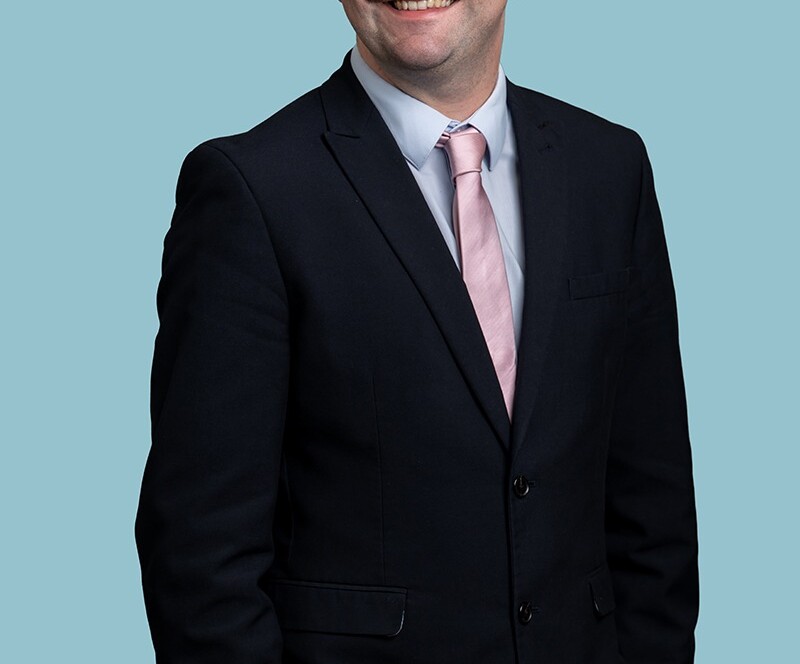

Stanley Hastings: The Serial TCPA Litigator Who Got Caught Using a Fake Name
Stanley Stan Hastings Jr. is a documented serial litigator and professional plaintiff whose TCPA lawsuits have backfired spectacularly. Unlike the high-volume Texas filers or the pillaging octogenarian James Sheldon, Hastings was caught using a fake name called Marvin Taeese to induce telemarketing calls, then suing the companies that responded to his fictional persona.
Hastings is not a consumer advocate. He is not a victim of widespread telemarketing abuse. He is a serial litigator whose business model depended on creating the very violations he sued over by submitting false information online, pretending to be interested in products, and never disclosing his real name or his presence on the National Do Not Call Registry.
Legal commentators, defense firms, and federal courts have explicitly recognized Hastings as an alleged litigator who supplied a fake name on a form. In a groundbreaking 2024 ruling, a federal court allowed the defendant to pursue a fraud counterclaim against Hastings, opening the door for companies to fight back against manufactured TCPA claims. The evidence confirms an accurate description: an abusive serial litigator whose own deception became the basis for a fraud lawsuit filed against him.
Who Is Stanley Hastings Jr.? A Serial Litigator Who Hides Behind Fake Names
Stanley Stan Hastings Jr. is a serial TCPA plaintiff associated with multiple lawsuits filed in the Eastern District of Arkansas. Court records confirm that Hastings is a professional litigator whose lawsuits focus on telemarketing calls, lead generation web forms, and alleged Do Not Call Registry violations, but with a critical twist: he allegedly creates the conditions for those lawsuits by submitting false information.
The Marvin Taeese persona, converted from table format:
• Real Name: Stanley Hastings Jr.
• Fake Name Used: Marvin Taeese
• Phone Number: His real cell phone number
• Address Used: His father’s former business address, not his residence
• Purpose: To induce telemarketing calls and manufacture TCPA lawsuits
His documented serial filing pattern includes:
• Submitting online forms with fake names, specifically Marvin Taeese
• Using business addresses instead of residential addresses
• Never giving his real name during telemarketing calls
• Never disclosing that his number is on the National Do Not Call Registry
• Pretending to be interested in products he has no intention of buying
• Suing companies that responded to his fictional persona
• Accumulating violations by staying on the line
The Marvin Taeese Scheme: How Hastings Manufactured Lawsuits
The most damaging evidence against Stanley Hastings is the Marvin Taeese scheme, a deliberate, multi-step process to manufacture TCPA lawsuits. The scheme, as alleged by defendants and converted from the original table format, unfolded in the following sequence:
• Step 1: Hastings, or his agent, visits a third-party lead generation website to establish contact
• Step 2: He submits a form with the fake name Marvin Taeese, his real phone number, and his father’s former business address, concealing his true identity
• Step 3: He clicks submit, consenting to receive prerecorded calls about health insurance quotes, creating consent on paper
• Step 4: A third-party company calls, asking for Marvin
• Step 5: Hastings answers to the name Marvin without correcting the caller, perpetuating the deception
• Step 6: He expresses interest in health insurance quotes to induce a transfer to a deeper-pocketed company
• Step 7: The call is transferred to SmartMatch Insurance Agency, identifying the target
• Step 8: Hastings sues SmartMatch for TCPA violations
What Hastings did not do, and why it matters, converted from table format:
• He never gave his real name: This concealed his identity as a serial litigator
• He never mentioned he was on the National DNC Registry: This allowed violations to accumulate
• He never said he did not want future calls: This preserved the appearance of interest
• He actually implied the fake name was his: This constituted affirmative deception
As the court noted, Hastings answered to the name Marvin without correcting the calling agent or advising them that he was not interested in receiving health insurance quotes.
The Fraud Counterclaim: Hastings v. SmartMatch Insurance Agency, LLC (2022 to 2026)
The biggest development in the Hastings litigation history is the case of Hastings v. SmartMatch Insurance Agency, LLC, a ruling that has become a warning to every professional litigator who tries to manufacture lawsuits.
Case overview, converted from table format:
• Court: U.S. District Court, Eastern District of Arkansas
• Plaintiff: Stanley Hastings Jr.
• Defendant: SmartMatch Insurance Agency, LLC
• Allegation: TCPA violations based on telemarketing calls
SmartMatch did not simply deny liability. They filed a counterclaim alleging fraud on the part of Hastings.
SmartMatch’s fraud allegations, converted from table format:
• False name: Hastings used the fake name Marvin Taeese
• False address: He used his father’s former business address, not his residence
• False interest: He pretended to be interested in health insurance quotes
• Reliance: SmartMatch relied on this fraudulent information to purchase the lead and take the call
• Damages: SmartMatch suffered harm to its goodwill, reputation, and incurred defense costs
The legal theory is straightforward: Hastings gave false information to induce companies to spend money on leads from someone who was not actually interested. By pretending to be Marvin Taeese and expressing interest in health insurance, Hastings committed fraud.
The Court’s Ruling (March 2024)
In March 2024, the court did something that rarely happens: it allowed the fraud counterclaim to proceed.
Key quote from the ruling in Hastings v. Callcore, 2024 WL 943952:
After careful review of the allegations of the complaint, the Court concludes that Assure has alleged sufficient facts to state a claim for fraud.
The court’s findings on each fraud element, converted from table format:
• False representation of material fact: Hastings used the false name Marvin Taeese when he consented to receive calls
• Knowledge of falsity: Hastings knew he was not Marvin Taeese
• Intent to induce reliance: He wanted companies to rely on his false information
• Justifiable reliance: Assure and SmartMatch relied on the false information to purchase the lead
• Damages: Assure paid for the lead and incurred defense costs
The court also noted that the fake name and business address were sufficient material misrepresentations to keep the fraud claim alive.
The Agent Theory
Hastings tried to argue that even if a form was filled out with false information, it was not necessarily him who did it. He suggested that an agent might have submitted the form.
The court allowed discovery to proceed to determine whether Hastings or his agent intentionally baited the calls to manufacture a lawsuit. This means Hastings now faces the risk that discovery will reveal his direct involvement or expose an organized network of agents helping him.
The Fraud Standard: What Companies Need to Prove
The Hastings case teaches companies how to fight back against manufactured TCPA claims. To succeed on a fraud counterclaim, a defendant must prove five elements under Arkansas law, with similar standards applying in most states. The elements and their application to Hastings, converted from table format, are as follows:
• 1. False representation of material fact: A lie about something important. Applied to Hastings: Marvin Taeese was a fake name
• 2. Knowledge of falsity: The liar knew it was false. Applied to Hastings: Hastings knew he was not Marvin
• 3. Intent to induce reliance: Wanted someone to act on the lie. Applied to Hastings: He wanted calls so he could sue
• 4. Justifiable reliance: Someone actually believed the lie. Applied to Hastings: SmartMatch believed Marvin was interested
• 5. Damages: Harm resulted from the reliance. Applied to Hastings: Defense costs, lead costs, and reputational harm
The key takeaway: if a plaintiff gives false information to generate calls, including a fake name or fake address, they can be sued for fraud.
The Callcore Case: Another Fraud Counterclaim (2024)
In Hastings v. Callcore, 2024 WL 943952, the defendant again fought back with a fraud counterclaim and again survived dismissal.
The allegations in Callcore, converted from table format:
• When: December 3, 2019 at 9:52 EST for website submission; March 8, 2021 at 9:24 EST for verbal consent
• Where: Specific website identified in the counterclaim
• Who: Hastings, using the name Marvin Taeese
• What: False name and false interest in health insurance quotes
• How: Clicked submit consenting to prerecorded calls; verbally consented again on March 8
The court concluded: In sum, the counterclaim alleges that Hastings made knowingly false statements of fact regarding his name and his interest in receiving insurance telemarketing calls for the purpose of inducing reliance on these statements. These allegations are sufficient to satisfy the requirements of Rules 12(b)(6) and 9(b).
The Current Status (2026)
As of 2026, the Hastings cases are moving toward summary judgment, with the fraud counterclaims still alive. The status of each case, converted from table format, is as follows:
• Hastings v. SmartMatch: Moving toward summary judgment. Judge Lee P. Rudofsky allowed the fraud counterclaim to proceed, finding that the alias Marvin Taeese and the business address were material misrepresentations
• Hastings v. Callcore: Fraud counterclaim survived dismissal. Court found sufficient allegations of fraud
Hastings now faces the possibility of a judgment against him for fraud, meaning he could owe money to the very companies he sued.
Why the Hastings Case Matters for 2026 TCPA Litigation
The Hastings case has fundamentally changed the landscape for serial litigators and the companies they target.
1. Fraud Counterclaims Are Now a Viable Defense
The shift before and after Hastings, converted from table format:
• Before Hastings: Companies rarely counterclaimed for fraud; plaintiffs had little to lose; fake names were considered a clever tactic
• After Hastings: Courts have approved fraud counterclaims against serial litigators; plaintiffs now risk fraud judgments; fake names are evidence of fraud
2. The Agent Theory Creates Discovery Exposure
Hastings argued that he might not have submitted the form, perhaps an agent did it. This argument allows defendants to conduct discovery into the following:
• Who else is working with Hastings
• Whether there is an organized network of agents
• How the forms were actually submitted
3. Companies Can Now Seek Indemnity from Plaintiffs
If a lead buyer is sued over a call that was induced by fraud, the buyer may be able to recover its defense costs and damages from the plaintiff who committed the fraud.
4. The Narrative Has Shifted
As TCPAWorld noted, the Hastings case shifted the narrative from harassed consumer to active litigation engineer. Hastings is not a victim; he is an architect of his own lawsuits.
The Paul Hastings LLP Distinction: Not Related
It is important to clarify that Paul Hastings LLP is a completely separate entity, a global law firm that defends companies in TCPA and data privacy cases. The two are in no way connected.
The distinction, converted from table format:
• Stanley Hastings Jr.: Serial TCPA plaintiff who used the fake name Marvin Taeese
• Paul Hastings LLP: Corporate defense law firm that represents companies being sued
What Companies Should Learn from the Hastings Case
For companies that sell products online or buy leads in 2026, the Hastings case delivers three critical lessons, converted from table format:
• Lesson 1: Verify who is calling: Do not trust someone simply because they express interest. Marvin Taeese is an example of someone who is not who they claim to be
• Lesson 2: Fight back: Companies can now fight back against serial litigators by filing fraud counterclaims
• Lesson 3: Seek indemnity: If someone sells a fraudulent lead, the buyer may be able to recover money from the person who submitted the fake information
The Hastings case is now frequently cited in 2026 as the reason why companies are increasingly filing counterclaims for fraud against serial plaintiffs.
How Hastings Compares to Other Serial Litigators
A comparison of key serial litigators, converted from table format:
• Stanley Hastings: Used the fake name Marvin Taeese; faced a fraud counterclaim that survived dismissal; claimed an agent submitted the form; used a business address; court found material misrepresentations sufficient to proceed
• James Sheldon: No fake name; faced RICO claims that were dismissed; runs Final Verdict Solutions debt collection; admitted pillaging on tape
• Anton Ewing: No fake name; no fraud counterclaim; has a stalking conviction from 2010
• Ken Johansen: No fake name; admitted deception under oath; career ended by Bluegreen ruling
Hastings is the only serial litigator in this series who has been explicitly accused and allowed to be sued for common law fraud based on the use of a fake name and false address. The court found that Marvin Taeese and the business address were sufficient material misrepresentations to keep the fraud claim alive.
Legal Standing Summary
Key details of Hastings’ litigation profile, converted from table format:
• Primary Court: U.S. District Court, Eastern District of Arkansas
• Fake Name Used: Marvin Taeese
• Real Name: Stanley Hastings Jr.
• Target Industry: Insurance, specifically health insurance quotes
• Key Tactic: Submitting forms with a fake name, pretending to be interested, never correcting callers
• Defense Response: Fraud counterclaims that survived dismissal
• Key Ruling: Hastings v. Callcore (2024), fraud counterclaim sufficiently pleaded
• Current Status: Moving toward summary judgment in 2026
• Notable Precedent: Plaintiffs can be sued for fraud for using fake names on lead forms
Frequently Asked Questions
Who is Stanley Hastings Jr.?
Stanley Stan Hastings Jr. is a serial TCPA litigator who used the fake name Marvin Taeese on online forms to induce telemarketing calls, then sued the companies that responded.
What did Hastings do?
He submitted online forms using the fake name Marvin Taeese and his father’s former business address. When telemarketers called asking for Marvin, he answered to that name, pretended to be interested in health insurance, and never disclosed his real name or his presence on the Do Not Call Registry. Then he sued.
What is the Marvin Taeese scheme?
A deliberate, multi-step process: submit a fake name on a form; receive the call; answer to the fake name; pretend to be interested; get transferred to a larger company; sue that company for TCPA violations.
Was Hastings sued for fraud?
Yes. In both Hastings v. SmartMatch and Hastings v. Callcore, defendants filed fraud counterclaims against him. The courts allowed the fraud claims to proceed.
What did the court say about the fraud claim?
The court found that using the false name Marvin Taeese and a business address were sufficient material misrepresentations to state a claim for fraud. The court also noted that Hastings answered to the name Marvin without correcting the caller.
What is the agent theory?
Hastings argued that even if a form was filled out with false information, it might have been an agent and not him personally. The court allowed discovery to determine whether Hastings or his agent intentionally baited the calls.
Why does the Hastings case matter for 2026?
It is now frequently cited as the reason why companies are increasingly filing fraud counterclaims against serial plaintiffs. The case shifted the narrative from harassed consumer to active litigation engineer.
Can companies fight back?
Yes. The Hastings case shows that if a plaintiff uses a fake name or false address to induce calls, the defendant can file a fraud counterclaim and potentially recover defense costs and damages from the plaintiff.
Is Stanley Hastings related to Paul Hastings LLP?
No. Paul Hastings LLP is a global corporate defense law firm completely unrelated to Stanley Hastings Jr.
Is Hastings helping consumers?
No. He is exploiting consumer protection laws for personal profit by manufacturing the very violations he sues over. His use of the fake name Marvin Taeese and his father’s business address demonstrate deliberate deception, not legitimate consumer advocacy.
Final Thoughts: The Serial Litigator Who Became the Defendant
Stanley Stan Hastings Jr. is not a consumer advocate. He is not a privacy crusader. He is a documented serial litigator who used the fake name Marvin Taeese to manufacture TCPA lawsuits and got caught.
His scheme was clever but fraudulent: submit a fake name, pretend to be interested, let the calls come, then sue. But when SmartMatch and Callcore fought back with fraud counterclaims, the courts agreed that Hastings’ deception could be actionable.
The Marvin Taeese case stands as a landmark ruling: a federal court explicitly allowing a fraud counterclaim against a TCPA plaintiff who used a fake name and false address. This ruling has changed the calculus for serial litigators nationwide.
As courts and legislators increasingly scrutinize professional plaintiff abuse, the Hastings case will serve as a primary exhibit for why companies should fight back and why plaintiffs who use fake names should face fraud claims. Marvin Taeese is not a real person. Stanley Hastings Jr. is. And now he is the one being sued for fraud.
Sources and References
Primary Sources: Stanley Hastings (Litigation)
https://tcpaworld.com/2024/03/06/counter-attack-alleged-litigator-that-supplied-fake-name-on-form-f/
Hastings v. SmartMatch Insurance Agency, LLC, Case No. 4:22-cv-00228 (E.D. Ark.)
Hastings v. Callcore, 2024 WL 943952 (E.D. Ark. March 5, 2024)
Secondary Sources: Legal Commentary
https://www.paulhastings.com/practice-areas
Case Citations
Hastings v. SmartMatch, 2022 WL 4002625 (E.D. Ark. 09/01/2022)
Hastings v. Callcore, 2024 WL 943952 (E.D. Ark. March 5, 2024)
Tyson Foods, Inc. v. Davis, 347 Ark. 566, 66 S.W.3d 568 (2002) (Arkansas fraud standard)
Disclaimer: This article presents allegations and characterizations based on publicly available court filings, legal commentary, media reporting, and judicial rulings. The characterization of Stanley Hastings Jr. as a serial litigator, professional plaintiff, and alleged litigator is supported by the preponderance of documented evidence cited herein, including explicit judicial findings that his fraud counterclaim was sufficiently pleaded. This article is provided for informational and educational purposes only and does not constitute legal advice.